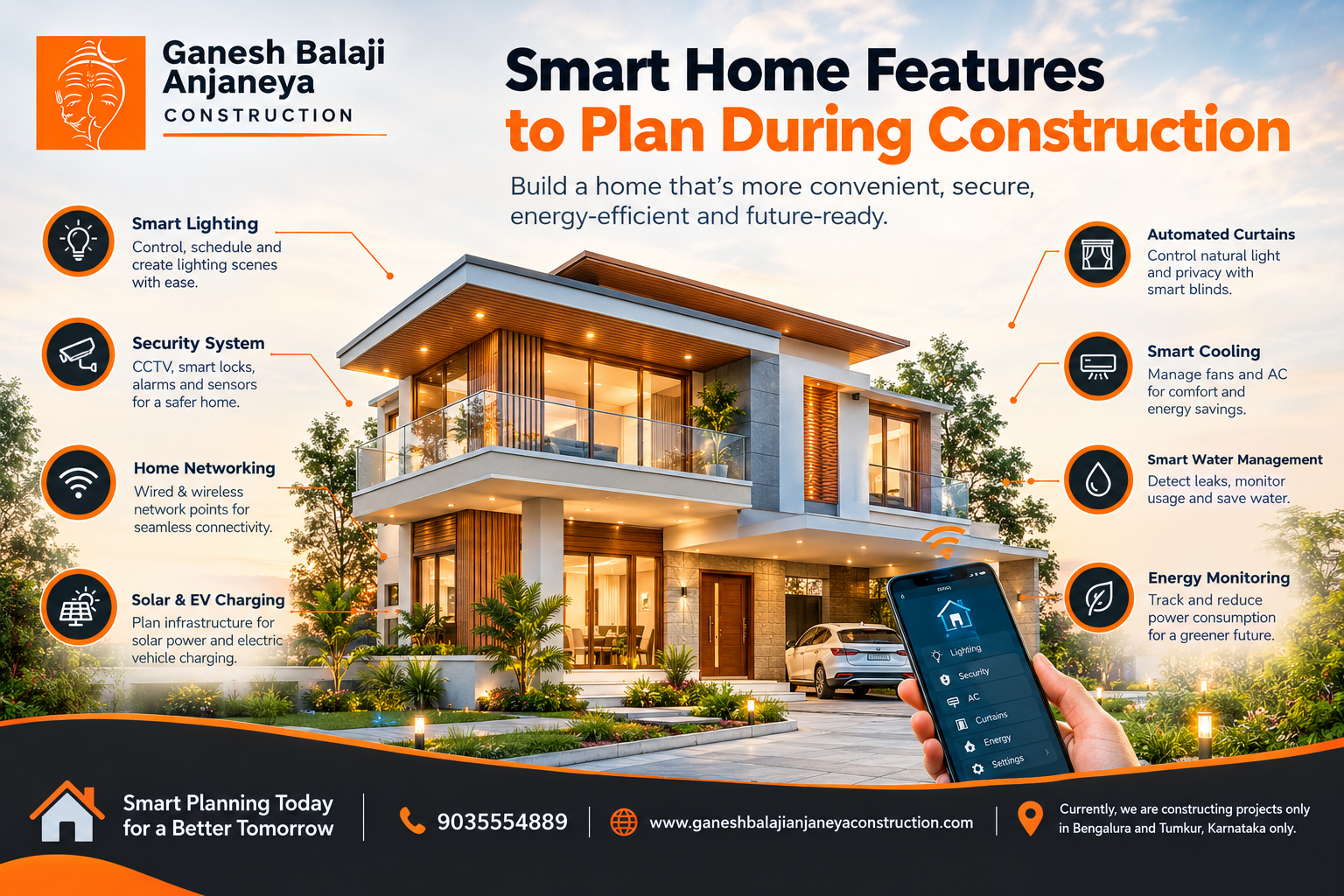
Smart home technology can make your home more convenient, secure, energy-efficient, and comfortable. Planning smart features during construction allows you to install the required wiring, power points, sensors, and networking infrastructure neatly—without expensive modifications later.
Building a smart home is not only about installing smart devices after construction. The best results come from planning the infrastructure during the design and construction stage. Proper electrical wiring, networking, power points, and device locations can make future upgrades much easier.
Here are some smart home features worth considering while building your home.
1. Smart Lighting
Plan for smart lighting in important areas such as the living room, bedrooms, kitchen, corridors, and exterior spaces.
Smart lighting can allow you to:
- Control lights through a mobile app
- Schedule lights automatically
- Use motion sensors
- Create different lighting scenes
- Control lights using voice commands
During construction, plan adequate switch points, wiring, and neutral connections where required.
2. Smart Switches and Controls
Smart switches can control lights, fans, and other electrical appliances remotely.
Instead of replacing switches later, consider selecting compatible smart switches while finalising the electrical layout. This can help maintain a clean and integrated appearance.
3. Smart Security System
Security should be considered from the beginning of the project.
You can plan infrastructure for:
- CCTV cameras
- Video doorbells
- Smart door locks
- Motion sensors
- Door and window sensors
- Security alarms
Plan camera locations and concealed wiring before plastering so that cables do not have to be exposed later.
4. Automated Curtains and Blinds
Motorised curtains can add convenience and help control sunlight and privacy.
If you are planning automated curtains, provide suitable electrical points near the windows during construction. This avoids visible wiring and difficult modifications later.
5. Smart Door Lock
A smart lock can provide keyless access using methods such as a PIN, fingerprint, mobile application, or other supported authentication methods.
While planning the main entrance, consider the door design, lock compatibility, power requirements, and backup access method.
6. Home Networking and Wi-Fi
A reliable internet connection is essential for a modern smart home.
Plan:
- LAN points in important rooms
- Router location
- Wi-Fi access-point locations
- Network cabinet or equipment space
- Concealed network cabling
For larger homes, multiple wired access points may provide better coverage than relying on a single router.
7. Smart Fans and Air Conditioning
Smart controls can be planned for fans, air conditioners, and other appliances.
Consider the location of electrical points and control switches carefully. If you plan automation later, having suitable wiring infrastructure in place can make installation easier.
8. Smart Energy Monitoring
Energy monitoring systems can help homeowners understand electricity consumption.
You can plan for monitoring of major loads such as:
- Air conditioners
- Water heaters
- Kitchen appliances
- Solar systems
- EV charging systems
This can help you identify high-consumption appliances and manage energy usage more effectively.
9. Solar and EV Charging Preparation
If you are considering solar power or an electric vehicle in the future, planning during construction can be beneficial.
Reserve suitable space and electrical infrastructure for:
- Solar equipment
- Inverter
- Battery storage
- EV charging point
- Electrical protection equipment
Even if you don't install everything immediately, future-ready planning can reduce modification work.
10. Smart Water Management
Smart water systems can also be incorporated into modern homes.
Depending on your requirements, you can plan for:
- Water-level sensors
- Automated pumps
- Leak detection sensors
- Smart irrigation
- Tank monitoring
These systems can improve convenience and help detect potential water-related problems early.
11. Home Automation Hub
If you plan to use multiple smart devices, consider where the central automation equipment, networking equipment, and power backup will be located.
A dedicated, accessible location can make maintenance and future upgrades easier.
12. Plan for Future Upgrades
Technology changes quickly. You don't need to install every smart device during construction.
Instead, focus on creating a future-ready infrastructure with:
- Adequate electrical points
- Conduits for additional wiring
- Network cabling
- Sufficient power capacity
- Accessible equipment locations
This gives you flexibility to add new technologies later.
Final Thoughts
A smart home begins with smart planning. By considering automation, security, networking, lighting, energy management, and future technology during construction, you can create a home that is more convenient, connected, secure, and adaptable.
Planning these features before electrical and finishing work begins can also help reduce the need for costly modifications later. SGBA Construction
For a new home in Bengaluru or Tumkur, integrating smart-home infrastructure with the architectural and electrical design can help create a modern home that is ready for today's technology and tomorrow's upgrades.
Here are some smart home features worth considering while building your home.
1. Smart Lighting
Plan for smart lighting in important areas such as the living room, bedrooms, kitchen, corridors, and exterior spaces.
Smart lighting can allow you to:
- Control lights through a mobile app
- Schedule lights automatically
- Use motion sensors
- Create different lighting scenes
- Control lights using voice commands
During construction, plan adequate switch points, wiring, and neutral connections where required.
2. Smart Switches and Controls
Smart switches can control lights, fans, and other electrical appliances remotely.
Instead of replacing switches later, consider selecting compatible smart switches while finalising the electrical layout. This can help maintain a clean and integrated appearance.
3. Smart Security System
Security should be considered from the beginning of the project.
You can plan infrastructure for:
- CCTV cameras
- Video doorbells
- Smart door locks
- Motion sensors
- Door and window sensors
- Security alarms
Plan camera locations and concealed wiring before plastering so that cables do not have to be exposed later.
4. Automated Curtains and Blinds
Motorised curtains can add convenience and help control sunlight and privacy.
If you are planning automated curtains, provide suitable electrical points near the windows during construction. This avoids visible wiring and difficult modifications later.
5. Smart Door Lock
A smart lock can provide keyless access using methods such as a PIN, fingerprint, mobile application, or other supported authentication methods.
While planning the main entrance, consider the door design, lock compatibility, power requirements, and backup access method.
6. Home Networking and Wi-Fi
A reliable internet connection is essential for a modern smart home.
Plan:
- LAN points in important rooms
- Router location
- Wi-Fi access-point locations
- Network cabinet or equipment space
- Concealed network cabling
For larger homes, multiple wired access points may provide better coverage than relying on a single router.
7. Smart Fans and Air Conditioning
Smart controls can be planned for fans, air conditioners, and other appliances.
Consider the location of electrical points and control switches carefully. If you plan automation later, having suitable wiring infrastructure in place can make installation easier.
8. Smart Energy Monitoring
Energy monitoring systems can help homeowners understand electricity consumption.
You can plan for monitoring of major loads such as:
- Air conditioners
- Water heaters
- Kitchen appliances
- Solar systems
- EV charging systems
This can help you identify high-consumption appliances and manage energy usage more effectively.
9. Solar and EV Charging Preparation
If you are considering solar power or an electric vehicle in the future, planning during construction can be beneficial.
Reserve suitable space and electrical infrastructure for:
- Solar equipment
- Inverter
- Battery storage
- EV charging point
- Electrical protection equipment
Even if you don't install everything immediately, future-ready planning can reduce modification work.
10. Smart Water Management
Smart water systems can also be incorporated into modern homes.
Depending on your requirements, you can plan for:
- Water-level sensors
- Automated pumps
- Leak detection sensors
- Smart irrigation
- Tank monitoring
These systems can improve convenience and help detect potential water-related problems early.
11. Home Automation Hub
If you plan to use multiple smart devices, consider where the central automation equipment, networking equipment, and power backup will be located.
A dedicated, accessible location can make maintenance and future upgrades easier.
12. Plan for Future Upgrades
Technology changes quickly. You don't need to install every smart device during construction.
Instead, focus on creating a future-ready infrastructure with:
- Adequate electrical points
- Conduits for additional wiring
- Network cabling
- Sufficient power capacity
- Accessible equipment locations
This gives you flexibility to add new technologies later.
Final Thoughts
A smart home begins with smart planning. By considering automation, security, networking, lighting, energy management, and future technology during construction, you can create a home that is more convenient, connected, secure, and adaptable.
Planning these features before electrical and finishing work begins can also help reduce the need for costly modifications later. SGBA Construction
For a new home in Bengaluru or Tumkur, integrating smart-home infrastructure with the architectural and electrical design can help create a modern home that is ready for today's technology and tomorrow's upgrades.