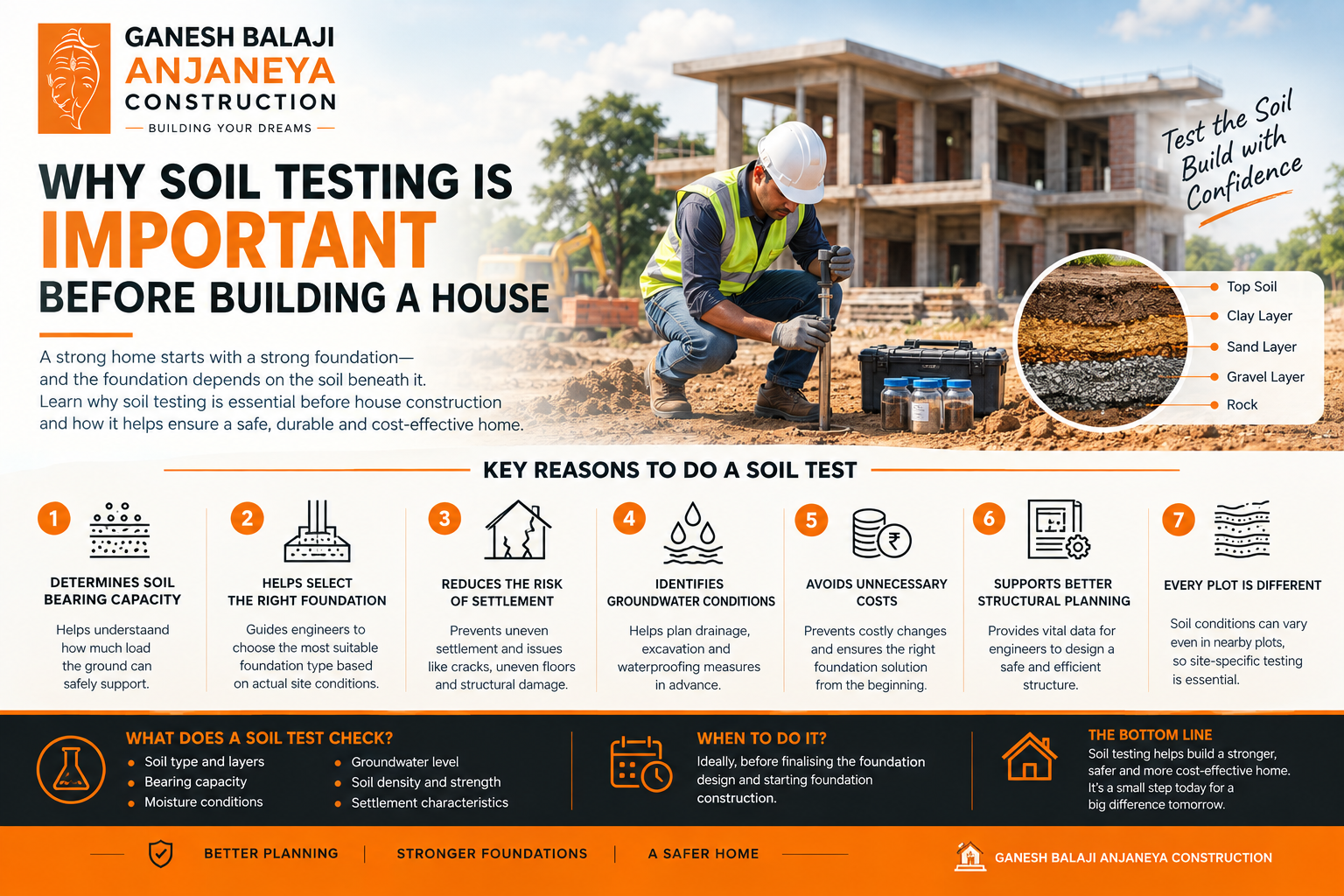
A strong home starts with a strong foundation—and the foundation depends on the soil beneath it. Learn why soil testing is essential before house construction and how it helps determine foundation requirements, improve structural safety, control costs, and prevent future problems
Why Soil Testing Is Important Before Building a House
Building a house is a major investment, and the strength of the structure begins below ground. While homeowners often focus on floor plans, elevation, interiors, and materials, the soil on which the house is built is equally important.
Soil testing helps understand the characteristics and bearing capacity of the ground before foundation work begins. The results can help engineers select an appropriate foundation design based on actual site conditions rather than assumptions.
1. Helps Determine the Soil Bearing Capacity
Different types of soil can support different amounts of load. Soil may consist of clay, sand, silt, gravel, rock, or a combination of materials.
A soil investigation helps determine how much load the ground can safely support. This information is important for designing a suitable foundation for the proposed building.
2. Helps Select the Right Foundation
The foundation is responsible for transferring the building's load safely into the ground.
Depending on the soil conditions, building design, and structural requirements, engineers may consider different foundation solutions.
Soil test results provide valuable information for making this decision and help avoid using an unsuitable foundation system.
3. Reduces the Risk of Settlement
Poorly understood soil conditions can contribute to uneven settlement of a building.
Excessive or uneven settlement may eventually result in problems such as:
Cracks in walls
Uneven floors
Doors and windows becoming difficult to operate
Structural distress in severe cases
Proper soil investigation helps engineers account for site conditions during foundation design.
4. Helps Identify Groundwater Conditions
Groundwater levels can affect excavation, foundation construction, drainage, and waterproofing requirements.
Understanding groundwater conditions before construction allows the project team to plan appropriate measures where necessary.
This can be particularly important for sites with basements, deep foundations, or challenging ground conditions.
5. Helps Avoid Unnecessary Construction Costs
Soil testing is an additional expense at the beginning of a project, but it can potentially prevent much larger costs caused by unsuitable foundation decisions or unexpected ground conditions.
Instead of over-designing or under-designing the foundation, engineers can use site-specific information to develop a more appropriate solution.
6. Provides Better Structural Planning
A structural engineer needs accurate information about the site when designing the foundation.
Soil investigation results can be considered along with:
Building load
Number of floors
Structural system
Foundation depth
Ground conditions
Local site characteristics
This creates a more informed foundation design process.
7. Every Plot Can Have Different Soil Conditions
Two plots located in the same neighbourhood may not necessarily have identical soil conditions. Previous land use, filling, excavation, groundwater, and natural soil layers can vary from site to site.
Therefore, relying only on what was found on a nearby property may not provide enough information for your own construction project.
What Does a Soil Test Check?
The exact investigation depends on the site and project requirements, but a geotechnical investigation may examine factors such as:
Soil type and layers
Soil bearing characteristics
Moisture conditions
Groundwater level
Soil density and strength
Settlement-related characteristics
The resulting information can then be reviewed by the structural engineer for foundation planning.
When Should Soil Testing Be Done?
Ideally, soil investigation should be carried out before finalising the foundation design and starting foundation construction.
Doing it early gives the architect, structural engineer, and construction team the opportunity to consider the findings during the planning stage rather than making major changes after construction has started.
Can You Skip Soil Testing for a Small House?
The need for soil investigation depends on the project, site conditions, local requirements, and professional engineering assessment. A smaller residential building does not automatically mean that soil conditions can be ignored.
The safest approach is to discuss the site with a qualified structural or geotechnical professional and determine what investigation is appropriate for the proposed house.
Conclusion
Soil may not be visible once your home is completed, but it plays a critical role in supporting the entire structure. Understanding the soil before construction helps engineers make better foundation decisions and can reduce the risk of settlement, structural problems, and unexpected costs.
At Ganesh Balaji Anjaneya Construction, proper planning and professional execution are important parts of building a durable home. Before starting foundation work, homeowners should ensure that the site conditions and structural requirements have been properly assessed.
A beautiful home starts with a well-planned foundation—and a well-planned foundation starts with understanding the ground beneath it.
Building a house is a major investment, and the strength of the structure begins below ground. While homeowners often focus on floor plans, elevation, interiors, and materials, the soil on which the house is built is equally important.
Soil testing helps understand the characteristics and bearing capacity of the ground before foundation work begins. The results can help engineers select an appropriate foundation design based on actual site conditions rather than assumptions.
1. Helps Determine the Soil Bearing Capacity
Different types of soil can support different amounts of load. Soil may consist of clay, sand, silt, gravel, rock, or a combination of materials.
A soil investigation helps determine how much load the ground can safely support. This information is important for designing a suitable foundation for the proposed building.
2. Helps Select the Right Foundation
The foundation is responsible for transferring the building's load safely into the ground.
Depending on the soil conditions, building design, and structural requirements, engineers may consider different foundation solutions.
Soil test results provide valuable information for making this decision and help avoid using an unsuitable foundation system.
3. Reduces the Risk of Settlement
Poorly understood soil conditions can contribute to uneven settlement of a building.
Excessive or uneven settlement may eventually result in problems such as:
Cracks in walls
Uneven floors
Doors and windows becoming difficult to operate
Structural distress in severe cases
Proper soil investigation helps engineers account for site conditions during foundation design.
4. Helps Identify Groundwater Conditions
Groundwater levels can affect excavation, foundation construction, drainage, and waterproofing requirements.
Understanding groundwater conditions before construction allows the project team to plan appropriate measures where necessary.
This can be particularly important for sites with basements, deep foundations, or challenging ground conditions.
5. Helps Avoid Unnecessary Construction Costs
Soil testing is an additional expense at the beginning of a project, but it can potentially prevent much larger costs caused by unsuitable foundation decisions or unexpected ground conditions.
Instead of over-designing or under-designing the foundation, engineers can use site-specific information to develop a more appropriate solution.
6. Provides Better Structural Planning
A structural engineer needs accurate information about the site when designing the foundation.
Soil investigation results can be considered along with:
Building load
Number of floors
Structural system
Foundation depth
Ground conditions
Local site characteristics
This creates a more informed foundation design process.
7. Every Plot Can Have Different Soil Conditions
Two plots located in the same neighbourhood may not necessarily have identical soil conditions. Previous land use, filling, excavation, groundwater, and natural soil layers can vary from site to site.
Therefore, relying only on what was found on a nearby property may not provide enough information for your own construction project.
What Does a Soil Test Check?
The exact investigation depends on the site and project requirements, but a geotechnical investigation may examine factors such as:
Soil type and layers
Soil bearing characteristics
Moisture conditions
Groundwater level
Soil density and strength
Settlement-related characteristics
The resulting information can then be reviewed by the structural engineer for foundation planning.
When Should Soil Testing Be Done?
Ideally, soil investigation should be carried out before finalising the foundation design and starting foundation construction.
Doing it early gives the architect, structural engineer, and construction team the opportunity to consider the findings during the planning stage rather than making major changes after construction has started.
Can You Skip Soil Testing for a Small House?
The need for soil investigation depends on the project, site conditions, local requirements, and professional engineering assessment. A smaller residential building does not automatically mean that soil conditions can be ignored.
The safest approach is to discuss the site with a qualified structural or geotechnical professional and determine what investigation is appropriate for the proposed house.
Conclusion
Soil may not be visible once your home is completed, but it plays a critical role in supporting the entire structure. Understanding the soil before construction helps engineers make better foundation decisions and can reduce the risk of settlement, structural problems, and unexpected costs.
At Ganesh Balaji Anjaneya Construction, proper planning and professional execution are important parts of building a durable home. Before starting foundation work, homeowners should ensure that the site conditions and structural requirements have been properly assessed.
A beautiful home starts with a well-planned foundation—and a well-planned foundation starts with understanding the ground beneath it.