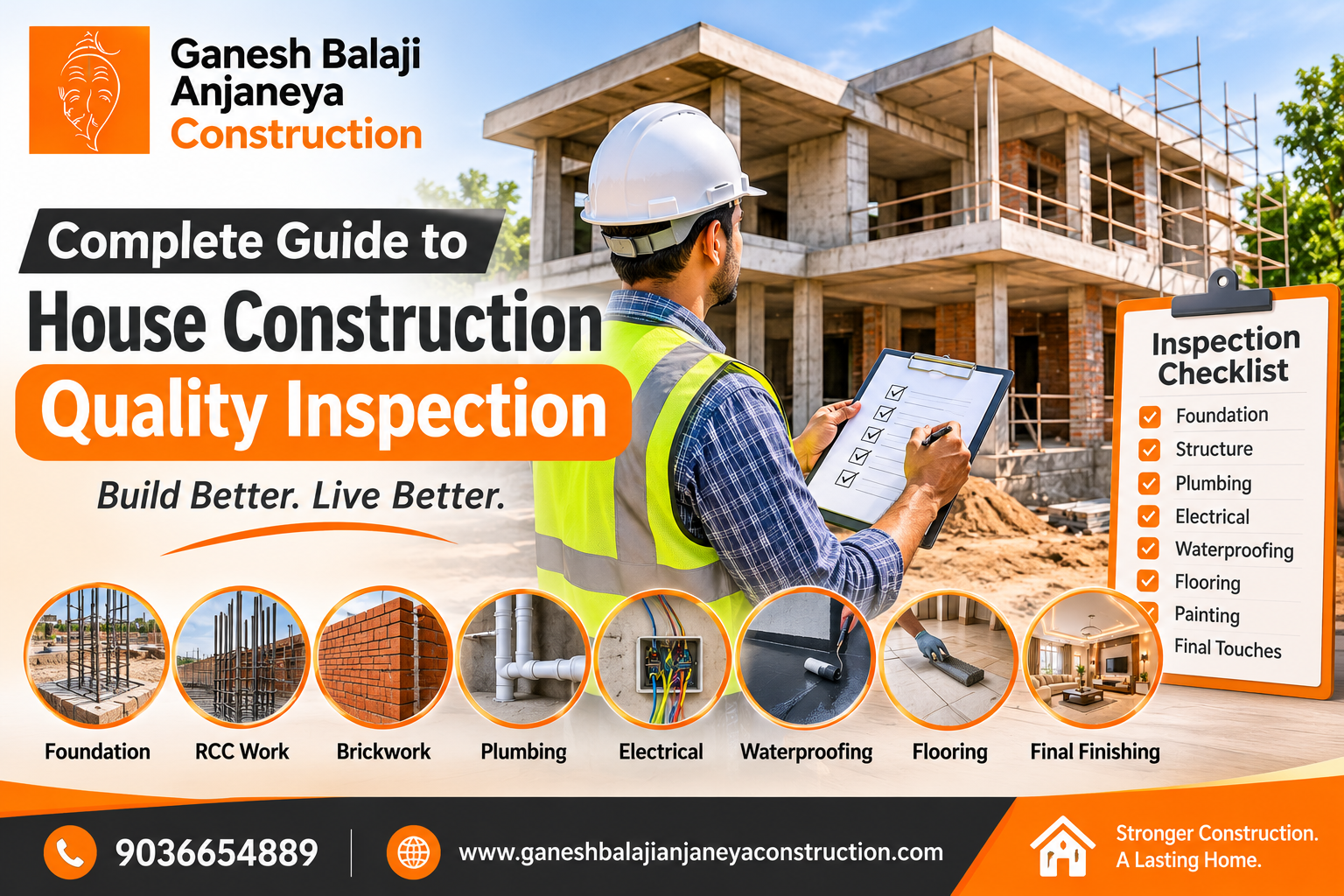
Ensure your dream home is built with quality, safety, and durability in mind. Discover a complete house construction quality inspection checklist covering foundations, concrete work, brickwork, waterproofing, plumbing, electrical installations, and finishing. Learn what homeowners should inspect at every construction stage to avoid common mistakes and build a strong, long-lasting home in Bengaluru and Tumkur.
Building a house is one of the biggest investments in life. While choosing the right design, materials, and construction company is important, checking construction quality at every stage is equally essential.
A properly inspected house can help identify construction defects early, reduce future maintenance problems, and improve the overall safety and durability of the building.
Whether you are constructing an independent house, duplex, or luxury villa, understanding the basic quality inspection process helps you make informed decisions throughout construction.
At **Ganesh Balaji Anjaneya Construction**, we believe that quality construction begins with proper planning, suitable materials, skilled workmanship, and regular inspections.
## 1. Foundation Quality Inspection
The foundation transfers the weight of the building safely to the supporting soil. Any mistakes during foundation construction can affect the entire structure.
Important inspection points include:
- Check whether the foundation layout matches the approved structural drawings.
- Ensure excavation dimensions and depths follow the engineering design.
- Verify soil conditions and foundation preparation.
- Check reinforcement size, spacing, and placement before concreting.
- Ensure the concrete is properly placed and compacted.
- Verify that curing is carried out as specified.
**Why it matters:** A properly designed and constructed foundation provides the necessary support and stability for the building.
## 2. Check the Quality of Cement and Construction Materials
Construction materials directly influence the strength and durability of a house. Materials should meet the specified project requirements and applicable quality standards.
Important materials to inspect include:
**Cement:** Check the manufacturing date, packaging condition, and applicable grade specifications. Avoid cement that has become lumpy due to moisture exposure.
**Steel:** Verify the reinforcement grade, diameter, and specifications against the structural drawings. Check for excessive corrosion or contamination.
**Bricks and Blocks:** Look for uniform dimensions, proper strength, and freedom from visible damage.
**Sand and Aggregates:** Ensure materials are clean and suitable for the specified concrete or masonry work.
**Water:** Use water suitable for construction as per applicable technical requirements.
**Why it matters:** Using appropriate materials helps achieve the required construction performance and reduces the risk of premature deterioration.
## 3. RCC Column, Beam, and Slab Inspection
Reinforced Cement Concrete (RCC) elements form an important part of many residential building structures.
Before concreting, inspect the following:
- Reinforcement diameter and spacing.
- Correct positioning of steel bars.
- Adequate concrete cover.
- Proper binding of reinforcement.
- Formwork alignment and stability.
- Electrical and plumbing service openings as per drawings.
- Cleanliness of the formwork before concrete placement.
During concreting, ensure that concrete is placed and compacted properly using suitable methods.
Also verify the specified concrete grade, approved mix design, and required quality tests.
**Why it matters:** Proper RCC inspection helps identify reinforcement, alignment, and concreting issues before they become difficult to correct.
## 4. Brickwork and Wall Construction Inspection
Walls provide enclosure, privacy, and separation between different spaces in a home.
During brickwork or blockwork inspection, check:
- Wall alignment and verticality.
- Uniform mortar joints.
- Proper bonding between masonry units.
- Door and window opening dimensions.
- Correct positioning of lintels.
- Suitable curing practices.
- Proper coordination with electrical and plumbing services.
Look for visible cracks, uneven surfaces, and poorly finished joints.
**Why it matters:** Good masonry workmanship improves the quality, appearance, and performance of walls.
## 5. Waterproofing Quality Inspection
Water leakage is a common problem in residential buildings. Poor waterproofing can damage walls, ceilings, flooring, and interior finishes.
Important waterproofing inspection areas include:
- Bathroom floors and walls.
- Kitchen wet areas.
- Balconies and utility spaces.
- Roof terraces.
- External walls and exposed surfaces.
- Water tanks and other water-retaining structures.
Before tiling or covering waterproofed surfaces, check the application, treatment of joints and corners, and pipe penetrations.
Conduct the recommended waterproofing test before proceeding with subsequent finishes.
**Why it matters:** Proper waterproofing protects the building against moisture-related damage and expensive repairs.
## 6. Plumbing Work Inspection
A properly installed plumbing system ensures a reliable water supply and effective wastewater disposal.
During inspection, check:
- Water supply pipe quality and routing.
- Drainage pipe slopes.
- Proper positioning of plumbing outlets.
- Water pressure and leakage testing.
- Correct installation of valves and fittings.
- Accessibility of maintenance points.
- Proper connections to drainage systems.
Before closing concealed pipework, carry out the required tests and inspect all connections.
**Why it matters:** Early plumbing inspection helps prevent concealed leakage, drainage problems, and unnecessary wall or floor repairs.
## 7. Electrical Installation Inspection
Electrical systems should be planned and installed with safety and future requirements in mind.
Important inspection points include:
- Proper positioning of switches and sockets.
- Correct cable sizes as per electrical design.
- Suitable distribution board installation.
- Proper earthing arrangements.
- Appropriate circuit protection.
- Correct wiring routes.
- Separate circuits for major appliances where required.
- Safe installation of lighting and outdoor electrical points.
Electrical installations should be inspected and tested by qualified professionals before the system is put into use.
**Why it matters:** Proper electrical inspection helps reduce the risk of electrical faults and supports safe everyday operation.
## 8. Flooring and Tile Installation Inspection
Flooring contributes to both the appearance and functionality of a home.
Check the following during installation:
- Uniform tile alignment.
- Consistent joint spacing.
- Proper surface level.
- Suitable floor slope in bathrooms and balconies.
- Secure tile installation without hollow or loose sections.
- Proper grouting and edge finishing.
- Clean and even transitions between rooms.
For wet areas, ensure the flooring supports effective drainage and appropriate slip resistance.
**Why it matters:** Good flooring workmanship improves appearance, comfort, safety, and durability.
## 9. Door, Window, and Frame Inspection
Doors and windows influence security, ventilation, natural lighting, and overall finishing quality.
Inspect the following:
- Correct frame dimensions and alignment.
- Smooth opening and closing.
- Proper fixing and support.
- Quality of hinges, locks, and handles.
- Suitable sealing around frames.
- Proper glass installation.
- Effective weather protection where required.
Check that windows and doors operate smoothly without unnecessary gaps or obstructions.
**Why it matters:** Proper installation improves functionality, security, and protection against rainwater and dust.
## 10. Painting and Finishing Quality Inspection
Finishing work gives the house its final appearance. Poor preparation or application can result in uneven surfaces, peeling paint, and visible defects.
Check:
- Wall surface preparation.
- Proper putty application.
- Even primer coverage.
- Uniform paint colour and finish.
- Smooth wall and ceiling surfaces.
- Proper finishing around doors and windows.
- Absence of visible paint stains and rough patches.
Before final approval, inspect the house under adequate lighting to identify imperfections.
**Why it matters:** Good finishing improves the appearance and overall presentation of the completed home.
## 11. Roof and Terrace Quality Inspection
The roof and terrace are exposed to changing weather conditions and require careful inspection.
Important points include:
- Proper roof drainage arrangements.
- Suitable waterproofing treatment.
- Correct slope towards rainwater outlets.
- Secure installation of parapet walls.
- Proper finishing around service pipes.
- No visible water accumulation.
- Appropriate protection of exposed surfaces.
Ensure terrace drainage outlets are accessible and free from construction debris.
**Why it matters:** Proper roof inspection helps prevent water accumulation, seepage, and moisture-related damage.
## 12. Final House Inspection Before Handover
Before taking possession of your newly constructed home, conduct a complete walkthrough.
Use this checklist:
- Check all doors, windows, locks, and handles.
- Test electrical switches, lights, and sockets.
- Inspect plumbing connections and water pressure.
- Check bathroom and balcony drainage.
- Look for visible cracks and damp patches.
- Inspect wall painting and flooring finishes.
- Test kitchen fittings and bathroom fixtures.
- Check staircase railings and safety arrangements.
- Verify water tank and pump operation.
- Review completion documents and relevant test records.
Prepare a list of pending defects and request that they be addressed before final handover.
## Common House Construction Quality Mistakes to Avoid
Some construction problems can be prevented through proper supervision and timely inspection.
Avoid these common mistakes:
1. Starting foundation work without proper soil and structural assessment.
2. Using materials that do not meet project specifications.
3. Ignoring reinforcement checks before concreting.
4. Poor concrete placement and curing practices.
5. Inadequate waterproofing in wet areas.
6. Improper plumbing and electrical coordination.
7. Ignoring floor slopes and drainage arrangements.
8. Covering concealed services without testing.
9. Rushing finishing work without proper surface preparation.
10. Skipping the final inspection before handover.
## When Should You Inspect Your House During Construction?
Construction quality inspection should not be limited to the final stage. Important checks should happen before each major activity is covered by the next construction stage.
| Construction stage | Important inspection |
|---|---|
| Before foundation | Soil, layout and excavation |
| Foundation work | Reinforcement and concreting |
| RCC construction | Steel, formwork and concrete |
| Brickwork | Alignment, joints and openings |
| Plumbing and electrical | Pipe routes, wiring and testing |
| Waterproofing | Application and water testing |
| Flooring | Levels, alignment and drainage |
| Painting | Surface preparation and finishing |
| Final handover | Complete building inspection |
## Conclusion
House construction quality inspection is essential for building a safe, durable, and comfortable home. From foundation work and RCC construction to waterproofing, plumbing, electrical installations, and final finishing, every stage requires proper attention.
Homeowners should remain involved throughout the construction process and ensure that important inspections are completed before work gets covered or moves to the next stage.
A systematic inspection process, combined with qualified technical supervision and suitable construction materials, helps reduce avoidable defects and supports long-term building performance.
**Planning to build your dream home in Bengaluru or Tumkur?**
Ganesh Balaji Anjaneya Construction focuses on thoughtful planning, construction quality, and functional home designs to help turn your dream home into reality.
**Website:** https://www.ganeshbalajianjaneyaconstruction.com/
**Contact:** 9036654889
*Ganesh Balaji Anjaneya Construction – Building Your Dream Home with Quality and Care.*