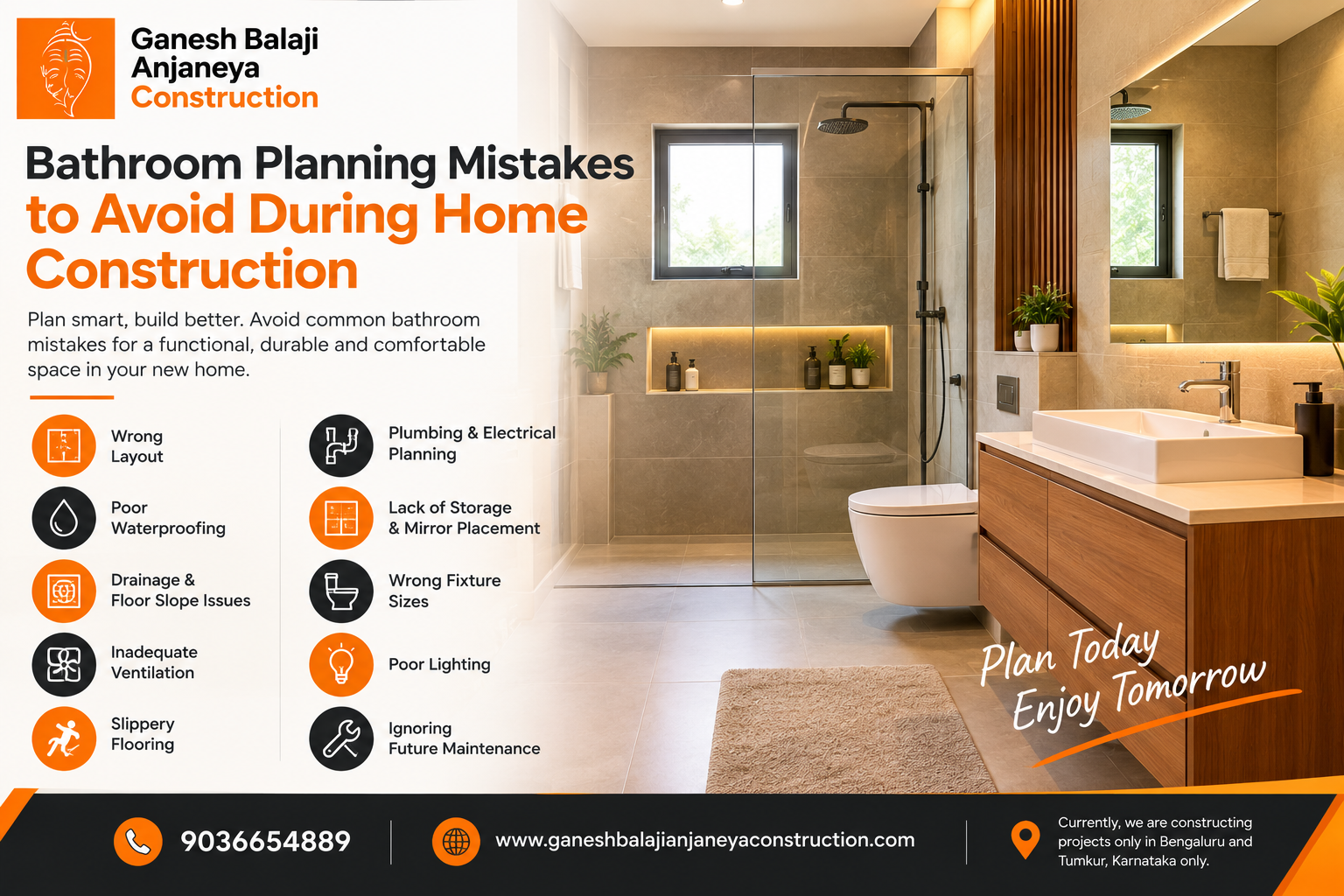
Avoid costly bathroom design mistakes by planning the layout, plumbing, drainage, ventilation, waterproofing, and storage before construction begins. Discover practical bathroom planning tips to create a comfortable, functional, and easy-to-maintain bathroom in your new home in Bengaluru or Tumkur.
A well-designed bathroom is an essential part of a comfortable home. From choosing the right fixtures to planning plumbing and waterproofing, every detail matters when building a new house. Mistakes during the construction stage can lead to water leakage, poor drainage, limited storage, and expensive repairs later.
Whether you are constructing a compact house or a luxury villa, careful bathroom planning can help you avoid unnecessary expenses and improve everyday convenience.
At Ganesh Balaji Anjaneya Construction, we believe that good construction begins with thoughtful planning and attention to detail.
1. Choosing the Wrong Bathroom Layout
One of the most common mistakes is finalizing the bathroom layout without considering available space and daily usage.
Poor placement of the washbasin, toilet, and shower can make the bathroom feel cramped and difficult to use.
How to avoid it:
- Plan the positions of all fixtures before plumbing work begins.
- Maintain comfortable movement and access around fixtures.
- Consider a separate shower area where space allows.
- Ensure doors do not obstruct essential fixtures or movement.
A well-planned layout improves functionality while making the bathroom feel more spacious.
2. Ignoring Proper Waterproofing
Waterproofing is one of the most important parts of bathroom construction. Inadequate waterproofing can cause damp patches, peeling paint, damaged ceilings, and leakage into adjoining rooms or lower floors.
How to avoid it:
- Use a suitable waterproofing system for bathroom floors and wet areas.
- Pay special attention to floor-wall junctions, corners, and pipe penetrations.
- Follow the recommended curing and application procedures.
- Conduct appropriate waterproofing tests before installing final finishes.
Never treat waterproofing as an optional extra. Correct installation before tiling is generally easier and less expensive than repairing concealed leaks later.
3. Poor Drainage and Incorrect Floor Slope
Standing water on bathroom floors can create hygiene issues, unpleasant odours, and slipping hazards.
Incorrect floor slopes or poorly positioned drains may prevent water from flowing efficiently toward the outlet.
How to avoid it:
- Plan drain locations according to the bathroom layout.
- Provide an appropriate floor slope toward the drain.
- Ensure the drainage system has suitable pipe sizes and connections.
- Test water flow before completing the flooring work.
The finished floor should drain effectively without creating uncomfortable or uneven walking surfaces.
4. Neglecting Bathroom Ventilation
Bathrooms produce moisture from showers, hot water, and daily use. Without adequate ventilation, excess humidity can contribute to condensation, mould growth, and unpleasant smells.
How to avoid it:
- Provide a window where the design and external conditions allow.
- Install a suitable exhaust fan if natural ventilation is insufficient.
- Ensure ventilation openings are not blocked.
- Plan electrical points for exhaust fans during construction.
Good ventilation helps keep bathroom surfaces drier and makes the space more comfortable.
5. Selecting Slippery Flooring
Bathroom flooring should look attractive while providing suitable slip resistance, particularly in wet areas.
Highly polished tiles may become slippery when wet, increasing the risk of falls.
How to avoid it:
- Choose tiles designed for bathroom and wet-area use.
- Check the manufacturer's slip-resistance information.
- Select flooring that is easy to clean and maintain.
- Ensure the floor slope and tile installation support effective drainage.
Prioritize safety and functionality over appearance alone.
6. Not Planning Plumbing and Electrical Points Properly
Changing plumbing lines or electrical points after tiling can be disruptive and expensive.
Poor planning may also result in inconvenient tap positions, insufficient power outlets, or inaccessible maintenance points.
How to avoid it:
- Finalize the fixture layout before concealed plumbing begins.
- Coordinate pipe routes with walls, niches, and cabinetry.
- Position water heaters, switches, and approved electrical outlets appropriately.
- Use suitable electrical protection and installation practices for wet areas.
- Keep essential plumbing connections accessible for maintenance where possible.
Plumbing and electrical plans should be coordinated before wall and floor finishes are installed.
7. Forgetting Storage and Mirror Placement
A bathroom without adequate storage can quickly become cluttered with toiletries, cleaning products, and daily essentials.
Similarly, a poorly positioned mirror or washbasin can reduce convenience.
How to avoid it:
- Add a vanity cabinet beneath the washbasin where space permits.
- Consider a mirrored storage cabinet.
- Use recessed niches in suitable shower walls.
- Position mirrors at a practical height with appropriate lighting.
- Select moisture-resistant materials for bathroom cabinets.
Built-in storage helps keep the bathroom organized without taking up unnecessary floor space.
8. Choosing Fixtures Without Measuring the Space
Large washbasins, oversized vanities, or poorly positioned toilets can restrict movement in a small bathroom.
Buying fixtures before confirming dimensions can also lead to installation problems.
How to avoid it:
- Measure the bathroom carefully before selecting fixtures.
- Check product dimensions and installation requirements.
- Allow sufficient clearance for doors, drawers, and shower enclosures.
- Choose compact or wall-mounted fixtures when appropriate for the design.
The right fixtures should complement the available space rather than overcrowd it.
9. Overlooking Lighting and Mirror Illumination
Poor lighting can make a bathroom difficult to use, particularly around the washbasin and mirror.
A single ceiling light may create shadows and leave some areas inadequately illuminated.
How to avoid it:
- Combine general lighting with suitable mirror lighting.
- Consider task lighting around the washbasin.
- Choose fixtures rated for their intended bathroom location.
- Use a qualified electrician to plan safe wiring and electrical protection.
A balanced lighting plan improves visibility while enhancing the overall appearance of the bathroom.
10. Ignoring Future Maintenance
A bathroom should remain practical long after construction is complete. Concealed leaks, inaccessible valves, and difficult-to-clean finishes can increase maintenance costs.
How to avoid it:
- Choose durable, easy-to-maintain fixtures and finishes.
- Keep cleanouts and service points accessible.
- Use suitable sealants around joints and fixtures.
- Ensure drains can be cleaned without major dismantling.
- Inspect plumbing, drainage, and waterproofing before handover.
Thinking about maintenance during the design stage can help prevent avoidable repair work in the future.
Conclusion
Bathroom planning involves much more than selecting tiles and sanitary fittings. A functional bathroom requires a well-designed layout, proper waterproofing, effective drainage, adequate ventilation, safe electrical installations, and practical storage.
By addressing these details before construction begins, homeowners can reduce the risk of expensive repairs and create bathrooms that are comfortable, durable, and easy to maintain.
Planning to build your dream home in Bengaluru or Tumkur?
Ganesh Balaji Anjaneya Construction focuses on practical planning and quality-conscious home construction to help you create a home suited to your needs.
- Website: https://www.ganeshbalajianjaneyaconstruction.com/
- Contact: 9036654889