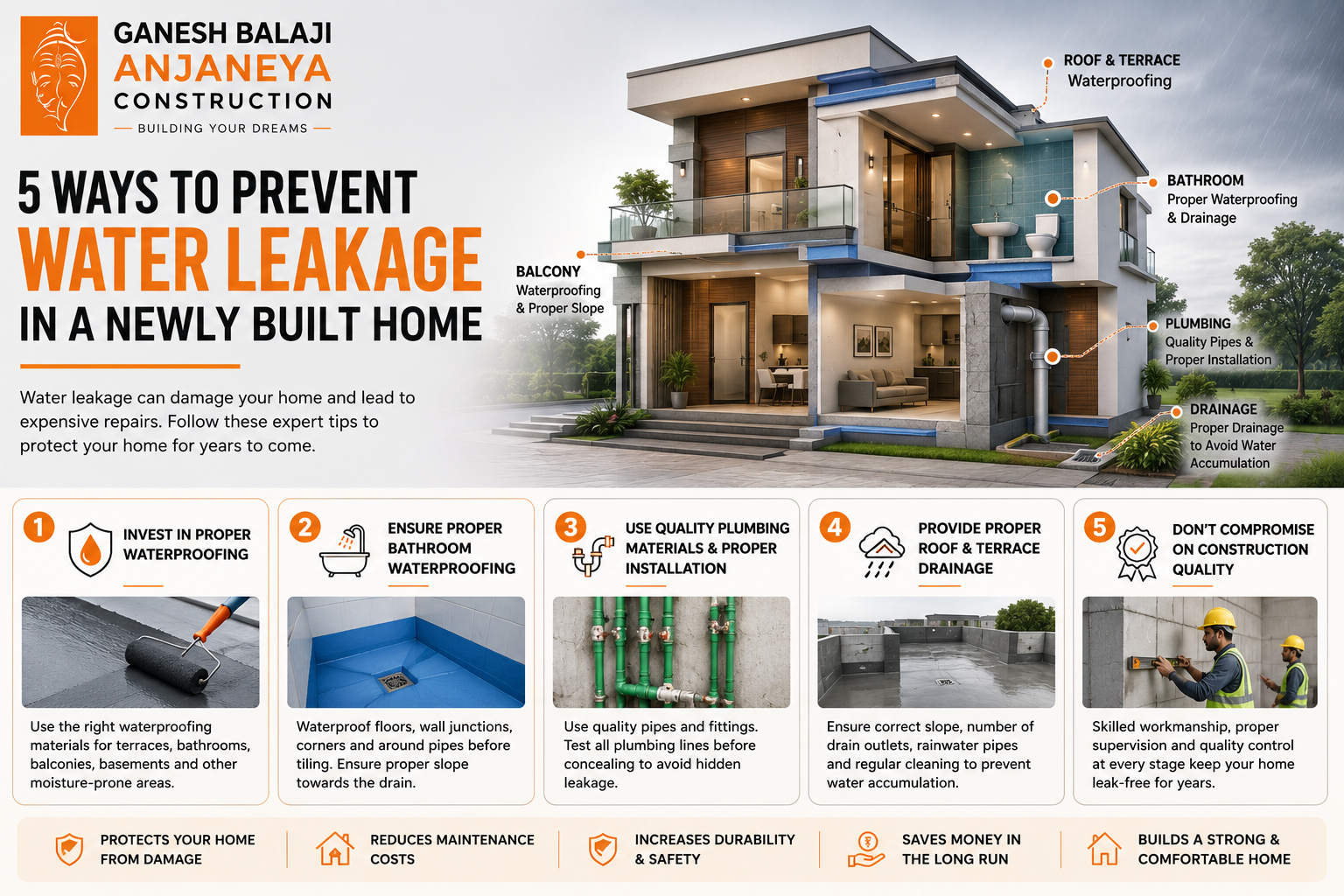
Water leakage can damage walls, ceilings, flooring, and electrical systems while creating costly maintenance problems. Learn five practical ways to prevent water leakage in a newly built home through proper waterproofing, quality materials, effective drainage, and careful construction.
Water leakage is one of the most common problems homeowners face after construction. Leakage can occur through terraces, bathrooms, balconies, external walls, plumbing lines, and other moisture-prone areas. If not addressed early, it can lead to damp walls, peeling paint, damaged finishes, mould, and expensive repairs.
The best way to deal with leakage is to prevent it during construction itself. Proper planning, quality materials, skilled workmanship, and regular inspection can significantly reduce the risk.
1. Invest in Proper Waterproofing
Waterproofing is one of the most important steps in protecting your home from moisture.
Special attention should be given to:
Bathrooms and toilets
Terraces and rooftops
Balconies
Utility areas
Basement areas, where applicable
Water tanks
Areas exposed to heavy rain
The waterproofing system should be selected according to the specific area and applied according to the manufacturer's recommended procedure. Proper surface preparation and curing are also important for long-term performance.
2. Ensure Proper Bathroom Waterproofing
Bathrooms are constantly exposed to water, making them one of the most common sources of leakage.
Before installing tiles and sanitary fittings, the appropriate waterproofing treatment should be completed. Particular attention should be given to floor-wall junctions, pipe penetrations, corners, and areas around drains.
A properly sloped bathroom floor is also important so that water flows efficiently toward the floor drain instead of accumulating in corners.
3. Use Quality Plumbing Materials and Proper Installation
Leakage does not always come through walls or roofs. Poor plumbing connections can also cause hidden water damage.
Use suitable, quality pipes and fittings and ensure that joints are properly installed. Plumbing lines should be tested before they are concealed behind walls or flooring.
Testing the system during construction makes it easier to identify and correct leaks before finishing work is completed.
4. Provide Proper Roof and Terrace Drainage
Rainwater accumulation on a terrace can increase the risk of seepage. Proper slope and drainage should therefore be incorporated into the design.
Make sure:
Water flows toward the drain points
Drain outlets are appropriately positioned
Rainwater pipes have sufficient capacity
Drain openings are protected from blockage
Waterproofing is properly integrated with drainage details
Regularly cleaning terrace drains after construction can also help prevent water accumulation during heavy rainfall.
5. Don't Compromise on Construction Quality
Even high-quality waterproofing products can fail if they are installed incorrectly. Skilled workmanship and proper supervision are therefore essential.
Construction teams should carefully monitor waterproofing, plumbing, concrete work, plastering, and drainage during the relevant stages. Areas prone to leakage should be inspected before they are covered by tiles, flooring, plaster, or other finishes.
Why Early Prevention Is Better Than Repair
Water leakage can be difficult and expensive to repair once the house is completely finished. Finding the exact source may require removing tiles, plaster, flooring, or other finishes.
Preventive measures during construction can help reduce these risks and protect the home's structure and finishes for the long term.
What Should Homeowners Check Before Handover?
Before taking possession of a newly constructed home, inspect moisture-prone areas carefully. Check bathrooms, terraces, balconies, utility areas, ceilings, external walls, and visible plumbing connections.
It is also useful to verify that plumbing and waterproofing tests have been completed wherever applicable.
Conclusion
Preventing water leakage starts long before you notice the first damp patch. Proper waterproofing, bathroom planning, quality plumbing materials, effective drainage, and professional construction practices can help protect your home from moisture-related problems.
At Ganesh Balaji Anjaneya Construction, careful planning and quality-focused execution are important parts of building a durable home. By addressing waterproofing and drainage during construction, homeowners can reduce future maintenance issues and enjoy a safer, more comfortable home for years to come.
The best way to deal with leakage is to prevent it during construction itself. Proper planning, quality materials, skilled workmanship, and regular inspection can significantly reduce the risk.
1. Invest in Proper Waterproofing
Waterproofing is one of the most important steps in protecting your home from moisture.
Special attention should be given to:
Bathrooms and toilets
Terraces and rooftops
Balconies
Utility areas
Basement areas, where applicable
Water tanks
Areas exposed to heavy rain
The waterproofing system should be selected according to the specific area and applied according to the manufacturer's recommended procedure. Proper surface preparation and curing are also important for long-term performance.
2. Ensure Proper Bathroom Waterproofing
Bathrooms are constantly exposed to water, making them one of the most common sources of leakage.
Before installing tiles and sanitary fittings, the appropriate waterproofing treatment should be completed. Particular attention should be given to floor-wall junctions, pipe penetrations, corners, and areas around drains.
A properly sloped bathroom floor is also important so that water flows efficiently toward the floor drain instead of accumulating in corners.
3. Use Quality Plumbing Materials and Proper Installation
Leakage does not always come through walls or roofs. Poor plumbing connections can also cause hidden water damage.
Use suitable, quality pipes and fittings and ensure that joints are properly installed. Plumbing lines should be tested before they are concealed behind walls or flooring.
Testing the system during construction makes it easier to identify and correct leaks before finishing work is completed.
4. Provide Proper Roof and Terrace Drainage
Rainwater accumulation on a terrace can increase the risk of seepage. Proper slope and drainage should therefore be incorporated into the design.
Make sure:
Water flows toward the drain points
Drain outlets are appropriately positioned
Rainwater pipes have sufficient capacity
Drain openings are protected from blockage
Waterproofing is properly integrated with drainage details
Regularly cleaning terrace drains after construction can also help prevent water accumulation during heavy rainfall.
5. Don't Compromise on Construction Quality
Even high-quality waterproofing products can fail if they are installed incorrectly. Skilled workmanship and proper supervision are therefore essential.
Construction teams should carefully monitor waterproofing, plumbing, concrete work, plastering, and drainage during the relevant stages. Areas prone to leakage should be inspected before they are covered by tiles, flooring, plaster, or other finishes.
Why Early Prevention Is Better Than Repair
Water leakage can be difficult and expensive to repair once the house is completely finished. Finding the exact source may require removing tiles, plaster, flooring, or other finishes.
Preventive measures during construction can help reduce these risks and protect the home's structure and finishes for the long term.
What Should Homeowners Check Before Handover?
Before taking possession of a newly constructed home, inspect moisture-prone areas carefully. Check bathrooms, terraces, balconies, utility areas, ceilings, external walls, and visible plumbing connections.
It is also useful to verify that plumbing and waterproofing tests have been completed wherever applicable.
Conclusion
Preventing water leakage starts long before you notice the first damp patch. Proper waterproofing, bathroom planning, quality plumbing materials, effective drainage, and professional construction practices can help protect your home from moisture-related problems.
At Ganesh Balaji Anjaneya Construction, careful planning and quality-focused execution are important parts of building a durable home. By addressing waterproofing and drainage during construction, homeowners can reduce future maintenance issues and enjoy a safer, more comfortable home for years to come.